We are extremely proud to present keynote talks at BCS BritCHI 2026 from two leading voices who have contributed to hugely original research directions in Human-Computer Interaction.
Our Opening Keynote on the Morning of Monday 2nd November 2026 will be given by:
Dr Advait Sarkar 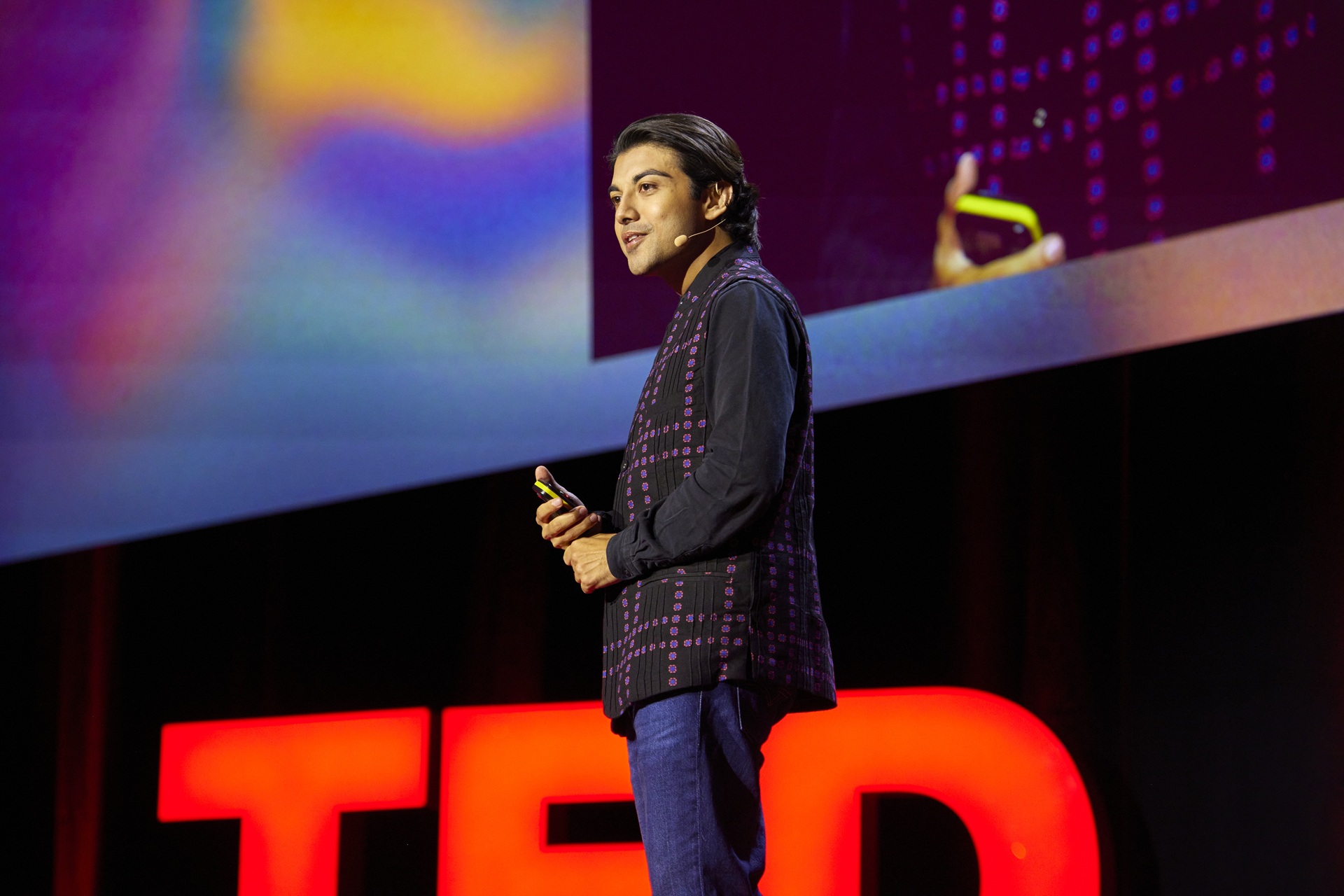
Title: The Story of My Experiments with Thought
One of the first real pieces of software I wrote (as a student at school) was an AI chatbot. It used keyword matching and a painstakingly curated database of responses, algorithms that today are laughably quaint. But the experience of using it was, to me and my friends, remarkable, because it indicated how simple it could be to create a simulacrum of thought from a database and a few lines of code that really had no business appearing to be “intelligent”.
Fast forward 25 years (something something PhD, something something research career), and I find myself (as I’m sure many of you do) in a veritable maelstrom of technological change, where our simulacra of thought can undeniably (and profitably too), be brought to bear on work and problems of true utility. At the same time, it is causing a veritable maelstrom of pressures on human thinking: on creativity, critical thinking, memory, and metacognition, effects that I and others have documented and measured. I will share some of these findings in my talk.
To many, this raises the question: if machines can think for us, does it matter if we cannot? My research has answered: of course it matters. But more importantly, this is the wrong question. We ought to be asking: how do we use the massive potential of this technology to make us better thinkers? As it happens, techniques of interaction design (some of which we have had for decades), can indeed be brought to bear successfully on this question. I will share the results of a series of experiments we have conducted that demonstrates exactly this.
I will close with a few thoughts on the opportunity (in my opinion, currently being missed), and obligation (in my opinion, moral) to pursue a distinctly British perspective on HCI. This means leaning less on the “globalised” CHI discourse as an engine of research priorities. This means leaning harder on Britain’s complex (and troubled) multicultural inheritance, and looking closer at the specific problems that this nation faces today. This means marshalling our collective ingenuity towards tackling genuine local issues, despite the instinct that HCI might not have anything to contribute.
Our machines offer us thought from everywhere and nowhere, placeless, and averaged over everybody, and the antidote in both cases is the same: the difficult, situated business of thinking for ourselves, from somewhere, about the things that are actually in front of us. A British culture of HCI is practised in scepticism, and constitutionally reluctant to be impressed. These sceptic isles ought to be the last place on earth willing to let a machine think on its behalf, and is therefore rather well placed to work out how a machine might help us think better.
Short bio: Advait Sarkar is an affiliated lecturer at the University of Cambridge, honorary lecturer at University College London, and researcher at Microsoft.
Our Closing Keynote on Tuesday 3rd November 2026 will be given by:
Professor Anne Roudaut 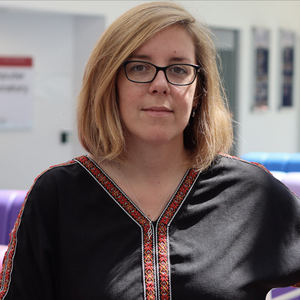
Title: No More Boring Boxes!
Rethinking the Shape of Interactive Devices
Interactive devices have remained largely constrained to flat, rigid, rectangular form factors despite remarkable advances in materials and fabrication. I argue that our digital devices should instead be free form and even shape changing. Imagine downloading a game from an app store and watching your phone reconfigure itself into a handheld console. Over the past twenty years, my research has explored this vision from multiple perspectives, including interaction design, user experience, free form interaction, and the technologies required to make it a reality.
In this talk, I will particularly focus on projects that raise provocative questions at the boundaries of HCI, from what we can learn by designing giant robots, to how chemistry and novel fabrication techniques may change the way we create interactive displays. Through these examples, I will reflect on the role of multidisciplinary research in expanding what we imagine, design, and ultimately build as interactive technologies.
Short bio: Anne Roudaut is Professor of Human Computer Interaction at the University of Bristol, where she leads the Bristol Interaction Group (BIG). Her work is rooted within Human Computer Interaction, working toward creating synergies with Material Engineering and Soft Robotics.